Table of Contents
ToggleMinimalist living ideas have gained serious momentum as people seek less clutter and more clarity. The concept is simple: own less, stress less, and focus on what truly matters. But turning that philosophy into daily practice? That’s where most people get stuck.
This guide breaks down practical minimalist living ideas anyone can start using today. From room-by-room decluttering strategies to mindset shifts that stick, readers will find actionable steps, not vague inspiration. Whether someone wants to clear out a cramped closet or rethink their entire relationship with stuff, these approaches offer a clear path forward.
Key Takeaways
- Minimalist living ideas focus on intentionality—keeping only items that serve a purpose or bring genuine joy.
- Declutter room by room to avoid overwhelm, starting with the bedroom and using strategies like the hanger trick to identify unused clothing.
- Adopt a minimalist mindset by questioning every purchase and recognizing the emotional weight that stuff carries.
- Use the “one in, one out” rule and daily 10-minute resets to prevent clutter from creeping back into your home.
- Prioritize experiences over objects, as research shows experiential purchases create more lasting happiness than material goods.
- Extend minimalist living ideas to your digital life by unsubscribing from unused emails, deleting unnecessary apps, and organizing files.
What Is Minimalist Living
Minimalist living centers on intentionality. It’s about keeping only the things that serve a purpose or bring genuine joy. Everything else? It goes.
This lifestyle doesn’t require living in an empty white room with one chair. Real minimalist living ideas look different for everyone. A family of four will have more belongings than a single person in a studio apartment, and that’s fine. The goal isn’t a specific number of possessions. It’s a deliberate relationship with the items people choose to keep.
Minimalism also extends beyond physical stuff. It touches how people spend their time, energy, and money. Someone practicing minimalist living might:
- Cancel subscriptions they never use
- Say no to social obligations that drain them
- Stop impulse buying
- Focus on experiences over accumulation
The benefits show up quickly. Studies from UCLA’s Center on Everyday Lives and Families found that people surrounded by clutter experience higher cortisol levels, the stress hormone. Less stuff often means less mental load.
Minimalist living ideas aren’t about deprivation. They’re about making room for what actually matters.
Decluttering Your Home Room by Room
The most effective minimalist living ideas start with physical spaces. Tackling an entire home at once overwhelms most people. A room-by-room approach works better.
The Bedroom
Start here. The bedroom should promote rest, not stress. Remove items that don’t belong, exercise equipment, work materials, piles of laundry waiting to be folded. Keep nightstands clear except for essentials like a lamp and a book.
Clothes deserve special attention. The average American owns 103 items of clothing, according to research from Closet Maid. Most people wear about 20% of their wardrobe regularly. The rest takes up space and creates decision fatigue every morning.
Try the hanger trick: turn all hangers backward. After wearing something, hang it facing forward. After six months, donate anything still facing backward.
The Kitchen
Kitchens collect gadgets. That spiralizer used once in 2019? The bread maker still in its box? These items steal counter space and cabinet real estate.
Keep tools that serve multiple purposes. A good chef’s knife replaces half a dozen specialty cutters. One quality pot and pan set beats fifteen mismatched pieces.
Minimalist living ideas for kitchens also include food storage. Clear containers make pantry contents visible. People buy less duplicate items when they can actually see what they own.
Living Areas
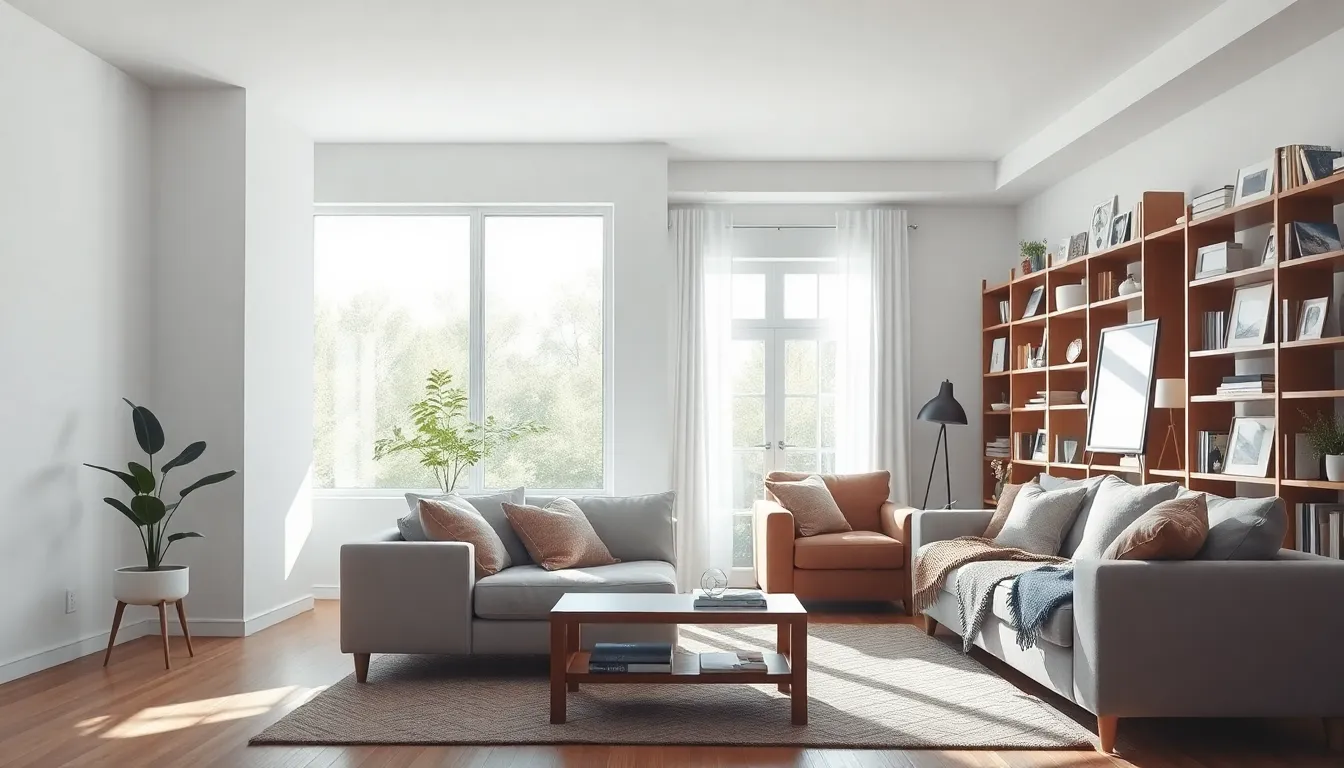
Living rooms and common spaces tend to accumulate random objects. Books nobody will read again, magazines from last year, decorative items that collect dust.
Apply the 90/90 rule: if something hasn’t been used in the last 90 days and won’t be used in the next 90, it can go. Sentimental items get trickier, but even those benefit from curation. Keeping three meaningful photos beats storing boxes of unsorted prints.
Bathrooms
Expired medications, half-used products, promotional samples that never get opened. Bathrooms hide surprising amounts of clutter.
Check expiration dates ruthlessly. Streamline to products that actually get used. One good moisturizer beats five mediocre ones.
Adopting a Minimalist Mindset
Physical decluttering only sticks when paired with a mental shift. The best minimalist living ideas address both.
First, question the urge to acquire. Before any purchase, ask: “Where will this live in my home? What will I remove to make room for it? Will I still want this in a year?” These questions interrupt impulse buying.
Second, recognize that stuff carries emotional weight. People keep things out of guilt (“It was a gift”), fear (“I might need it someday”), or false identity (“This represents who I want to be”). Acknowledging these patterns makes letting go easier.
Third, embrace “good enough.” Minimalist living ideas reject the endless pursuit of the perfect version of everything. The towels work fine. The phone still functions. The car runs well. Upgrading for marginal improvements creates a cycle that never satisfies.
Fourth, value experiences over objects. Research from Cornell University shows that experiential purchases, trips, concerts, meals with friends, create more lasting happiness than material goods. Objects lose their shine. Memories often gain value over time.
The minimalist mindset isn’t about feeling bad for owning things. It’s about feeling free to own less.
Simple Habits to Maintain a Minimalist Lifestyle
Minimalist living ideas need maintenance. Without regular habits, clutter creeps back.
One in, one out. For every new item that enters the home, something similar leaves. Buy a new shirt? Donate an old one. This rule prevents gradual accumulation.
Daily 10-minute reset. Spend ten minutes each evening returning items to their homes. Surfaces stay clear. Small messes don’t become big projects.
Monthly review. Pick one area each month for a quick audit. A single drawer, one shelf, a section of the garage. Regular small sessions prevent the need for massive purges later.
Wish list waiting period. When tempted by a non-essential purchase, add it to a wish list instead of buying immediately. Wait 30 days. Most items lose their appeal. The ones that don’t might actually be worth buying.
Digital decluttering. Minimalist living ideas extend to screens. Unsubscribe from email lists that no longer provide value. Delete unused apps. Organize files and photos. Digital clutter creates mental clutter too.
Gratitude practice. People who appreciate what they have feel less compulsion to acquire more. Taking stock of current possessions, really noticing and valuing them, reduces the pull of advertising and comparison.
These habits compound over time. A year of consistent practice transforms both spaces and spending patterns.